Work / Case
When the user can’t think straight, remove the wrong choice
2
attachment points, both on the shoulders, both correct
- Role
- Product developer, rescue vest (Sälmagen)
- Context
- Safety product for a long-distance skating club
- Timeframe
- 2018
- Problem
- Attach under stress, then pull a heavy person from the water
- Contribution
- Developed the Sälmagen rescue vest within the NIX team
- Outcome
- Prototype and physics model
- Limitation
- No test in a real ice rescue
01
The situation
A rescue system barely changed since the 1960s, rethought as a bachelor thesis.
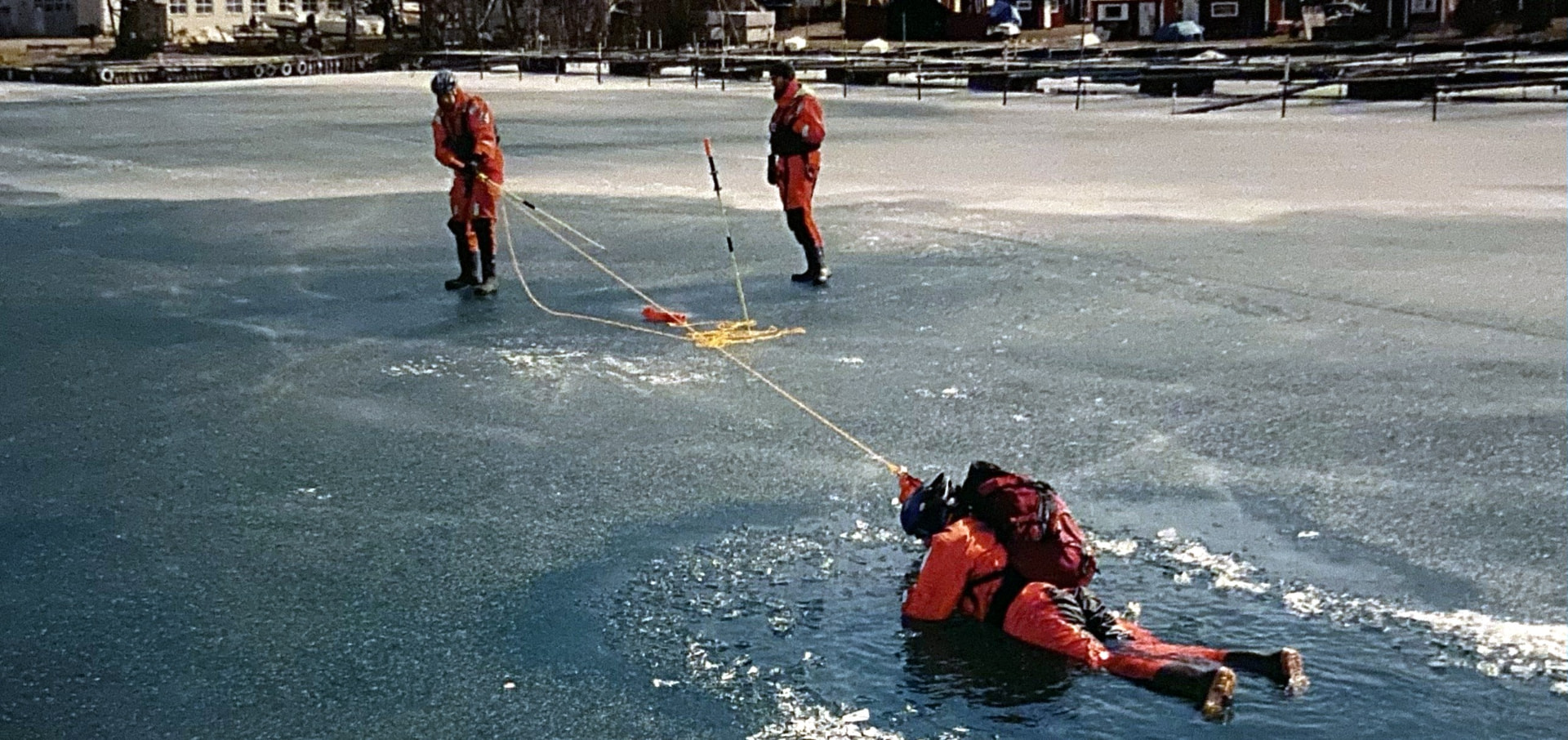
Long-distance skaters carry a throw line in case a companion goes through the ice. The system had barely changed since the 1960s.
For our bachelor thesis, six product developers set out to improve it, working with Linköping’s long-distance skating club. The result was NIX, a safety system of three linked concepts: an extension band, a lanyard bag and Sälmagen, a rescue vest. I worked on Sälmagen.
02
The real problem
The person in the water is one problem. The person pulling them out is the other.
We studied how rescues actually play out: interviews with skaters, literature from professional institutions, observation sessions on the ice. The findings that shaped the vest were about people, not equipment.
The person who has to attach the line is the one in the water: cold, frightened, and with their ability to make decisions failing. Clearer instructions don’t help someone in that state.
And once the line is on, it has to hold: a person in soaked winter gear is very heavy to pull up against the ice edge. A line clipped to a random loop on a backpack pulls through webbing never meant to lift a human being. Sälmagen’s shoulder attachment points answer both halves: the only place to clip, and a load path built to take the pull.
03
What we did
Make the wrong action physically impossible, not the right action clearer.
Fewer options. The vest covers the backpack’s straps and loops, leaving two reachable attachment points, both correct and both on the shoulders. Because every vest is identical, those points can be specified and quality controlled, which an improvised point on a personal pack never can.
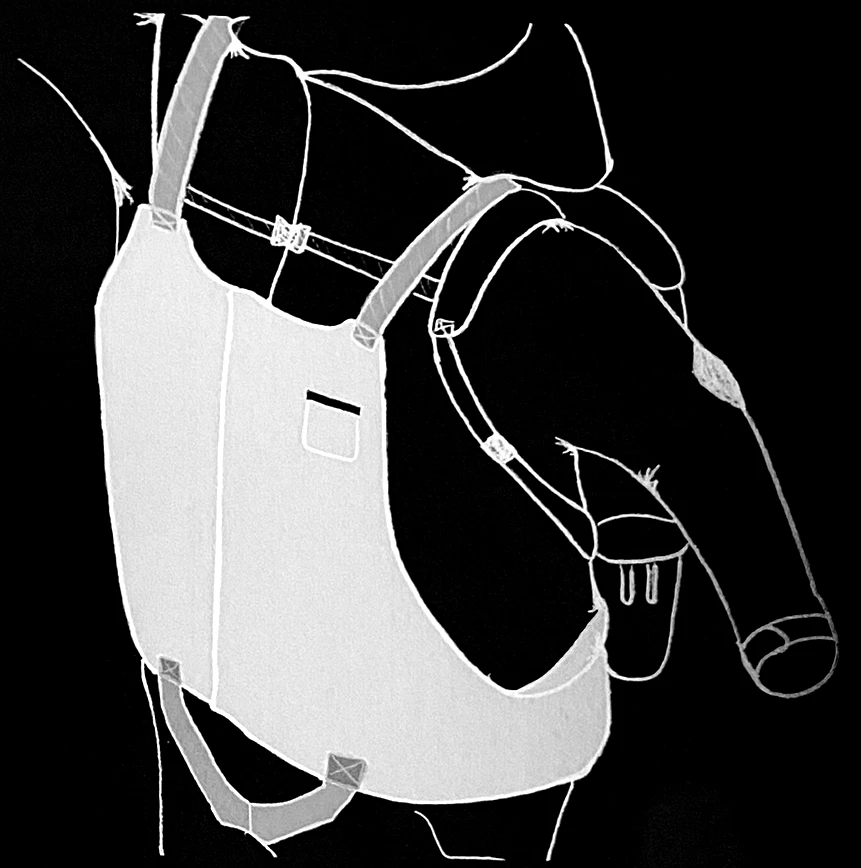
- Requirements from failure modes. The load runs through the vest rather than through webbing never rated to lift a person, and a buoyancy element rights a face-down person before the pulling begins.
- Built to glide. A low-friction front lets the person slide out over the ice edge while their companion pulls, like a seal on its belly. Hence the name: Sälmagen, “seal belly”.
- Interface split by stress level. The emergency side can’t be got wrong. The mounting side carries a printed label, because mounting happens calmly at home and can afford to be learned.
04
What changed
Prototype built, physics modelled, never tested on real ice.
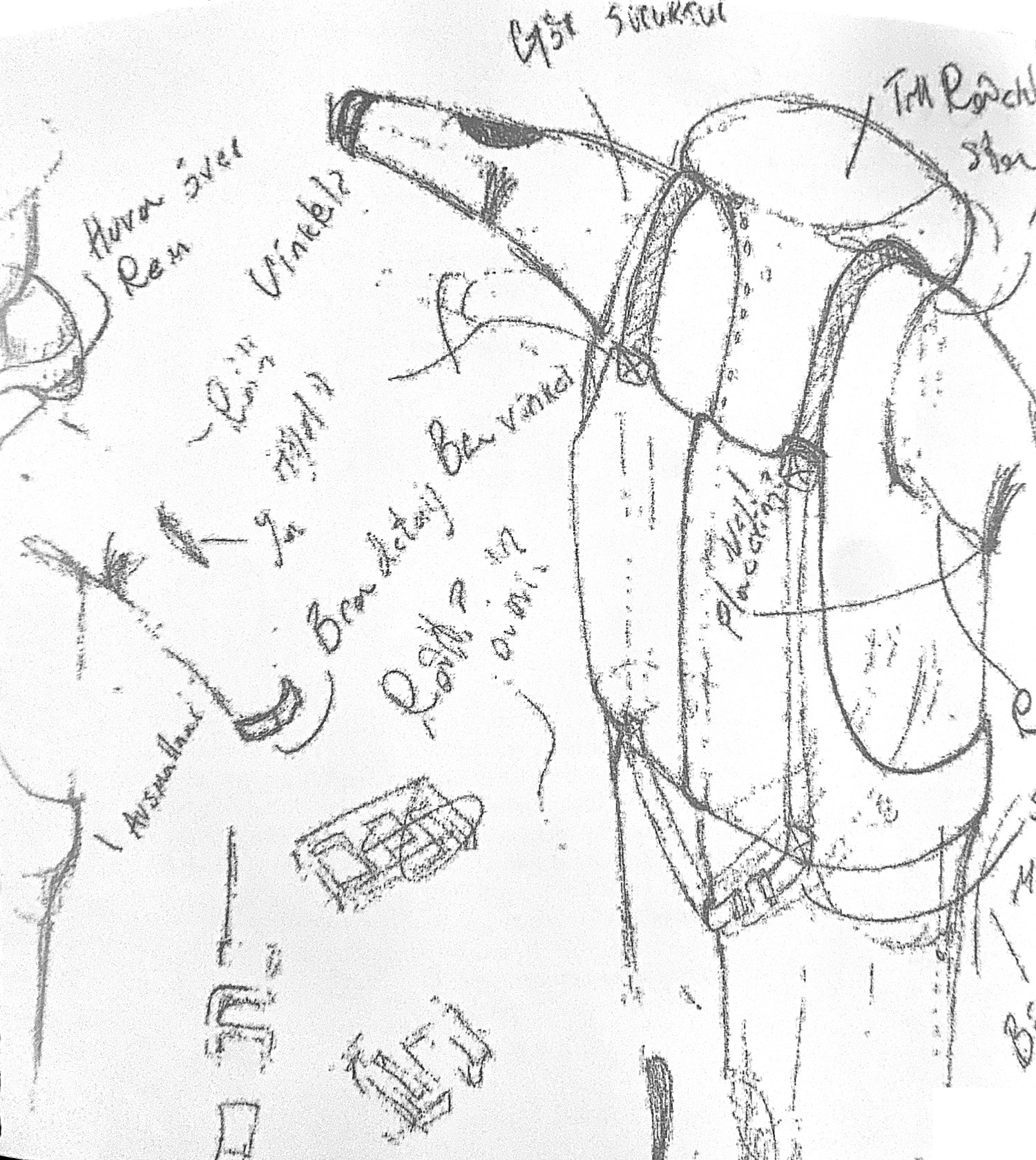
Sälmagen reached concept and prototype stage and was presented as part of NIX. With help from our professors, we built a physics model of the rescue, estimating some of the forces involved. It was never tested live in a real ice scenario.
05 / Reading it now
A safety product only works if it’s worn on the day it’s needed.Assumption
Skaters would wear the vest over their own backpack on every ordinary tour.
Test today
Give club members a simple mock-up to wear on several ordinary tours.
Kill-line
Stop if most remove it, leave it at home, or need a different backpack.
Two other assumptions also remained open: whether the low-friction front reduced pulling force, and whether the design could depend on a backpack the team did not control.
The wear test comes first. If the vest is not there when the ice breaks, the rest of the engineering does not matter.
Next case
HR data migration, 2022 to 2024
Turning data quality concerns into measurable action
Read the case
If this sounds familiar, let’s find out.
Two to four weeks from uncertainty to a decision you can act on.
Let's explore together